Longnose Gar Native
🔬 Lepisosteus osseus
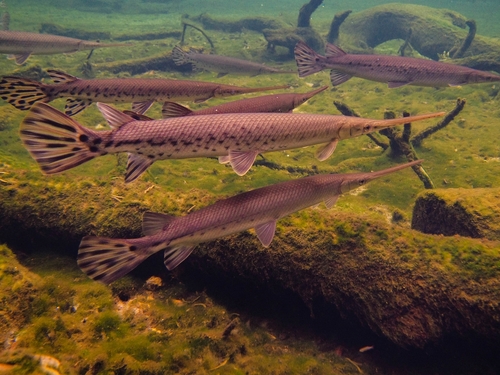
A prehistoric living fossil unchanged for 100 million years. Long, needle-thin snout packed with sharp teeth. Body covered in hard, diamond-shaped ganoid scales nearly impossible to cut. Often seen basking near the surface on warm days. Michigan's largest gar species.
🎣 Get Full Stocking Data & Forecasts
Fishing Pro · $4.99/mo · Cancel anytime
Bite this month
Good
Best season
Summer
Regulations
limit No limit
Where to Catch Longnose Gar in Michigan
| Lake | County | Population |
|---|---|---|
|
Brevoort Lake
4,179 acres
|
Mackinac | |
|
Hamlin Lake
5,000 acres
|
Mason | |
|
Houghton Lake
20,044 acres
|
Roscommon | |
|
Indian Lake
8,689 acres
|
Schoolcraft | |
|
Lake Cadillac
1,141 acres
|
Wexford | |
|
Lake Columbia
821 acres
|
Jackson | |
|
Lake Fenton
937 acres
|
Genesee | |
|
Lake Mitchell
2,580 acres
|
Wexford | |
|
Lake St. Clair
260,000 acres
|
Macomb | |
|
Manistee Lake
930 acres
|
Manistee | |
|
Muskegon Lake
4,150 acres
|
Muskegon | |
|
Muskegon Lake
4,150 acres
|
Muskegon | |
|
Ore Lake
233 acres
|
Livingston | |
|
Paw Paw Lake
1,000 acres
|
Van Buren | |
|
Portage Lake
800 acres
|
Washtenaw | |
|
Tawas Lake
1,100 acres
|
Iosco | |
|
Wixom Lake
2,180 acres
|
Midland |
Longnose Gar Conservation Status
Native Longnose Gar is native to Michigan waters. Native Michigan species. Population stable statewide. Completely harmless to humans despite fearsome appearance. The daily bag limit is No limit.
Longnose Gar Habitat & Behavior
Slow-moving rivers, weedy lake bays, and backwaters statewide. Tolerates warm water and low oxygen. Common in Lake Erie and Lake St. Clair tributaries and throughout the lower Michigan river systems. DNR records show Longnose Gar present in 17 Michigan water bodies. Bite activity rates Good or better in Apr, May, Jun, Jul, Aug and Sep.
Best Longnose Gar Techniques
Specialized rope or nylon-mesh lures (gar teeth tangle in fibers rather than missing a hook-point); also live baitfish on a wire leader. Standard hooks rarely penetrate the bony jaw.
Best Longnose Gar Baits
Wire leader rigs, minnows, small suckers (bow fishing most common)
Longnose Gar Fishing Regulations in Michigan
No limit
Daily limit
No limit
Possession limit
Year-round
Season
Bow fishing is a popular method. Gar eggs are toxic — do not consume.
⚠️ Regulations shown are general statewide guidelines for 2025. Rules vary by water body and change annually.
Always verify current regulations in the official Michigan DNR Fishing Guide before you fish.
Best Times to Fish Longnose Gar
Angler Tips for Longnose Gar
No tips yet for this species. Fishing Pro members can share tips and photos.
Be the first to share an angler tip
Fishing Pro members only