Alewife ⚠ Invasive
🔬 Alosa pseudoharengus
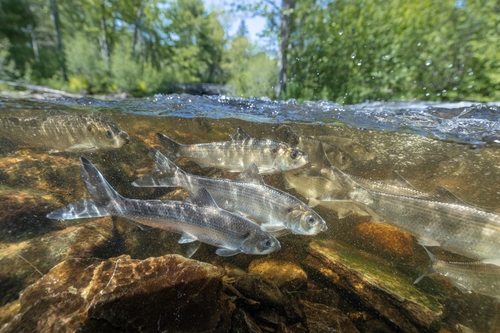
A small, silvery herring that entered the Great Lakes through the Welland Canal. By the 1960s, alewives had exploded to comprise over 90% of the fish biomass in Lake Michigan and were washing up on beaches in massive die-offs measured in tens of thousands of tons. The ecological crisis prompted MDNR to introduce Pacific salmon in 1966 specifically to eat them. Salmon planting worked -- and created the Great Lakes sport fishery Michigan now enjoys.
🎣 Get Full Stocking Data & Forecasts
Fishing Pro · $4.99/mo · Cancel anytime
Where to Catch Alewife in Michigan
| Lake | County | Population |
|---|---|---|
|
Charlevoix Lake
17,260 acres
|
Charlevoix | |
|
Indian Lake
8,689 acres
|
Schoolcraft | |
|
Lake Gogebic
13,380 acres
|
Gogebic | |
|
Lake Michigamme
4,149 acres
|
Marquette | |
|
Lake St. Clair
260,000 acres
|
Macomb | |
|
Mullett Lake
16,630 acres
|
Cheboygan | |
|
Muskegon Lake
4,150 acres
|
Muskegon | |
|
Muskegon Lake
4,150 acres
|
Muskegon |
Alewife Conservation Status
⚠ Invasive Alewife is considered an invasive species in Michigan. Invaded the Great Lakes through the Welland Canal -- present in all Great Lakes by the 1940s-50s. Massive die-offs in the 1960s created public health crises on Michigan beaches. The MDNR's decision to introduce coho salmon in 1966 to control alewife populations created the modern Great Lakes sport fishery. Alewife populations are now much reduced but remain an important forage species for salmon and lake trout. Their decline has ironically contributed to nutrient changes in the Great Lakes.
Alewife Habitat & Behavior
Open Great Lakes water. Schools in massive aggregations. Rarely enters inland waters except through river connections. DNR records show Alewife present in 8 Michigan water bodies.
Angler Tips for Alewife
No tips yet for this species. Fishing Pro members can share tips and photos.
Be the first to share an angler tip
Fishing Pro members only